You Are Not Alone In Your Fight For Justice
January 15, 2010

Recovery of Damages in Texas Wrongful Death Lawsuits

Many plaintiffs now ask what can be recovered in a Texas wrongful death medical malpractice case . Under Texas Civil Practice and Remedies Code (TX CPRC ) Section 74.301, there is a cap of $250,000 on "non-economic" damages.

Non-economic damages compensate an injured plaintiff for physical pain and suffering, mental or emotional pain, loss of consortium (the services of a spouse), disfigurement, physical impairment, and other types of non-monetary losses.

Exemplary damages, also known as punitive damages, are those damages which are often assessed against defendants for reckless or malicious behavior. Juries award these types of damages for the defendants' behavior. Exemplary damages are not included in the cap for non-economic damages.

The limit of civil liability for non-economic damages for a physician or health care provider is $250,000. The civil liability of healthcare institutions such as hospitals is $250,000 for non-economic damages. Registered nurses fall under the realm of healthcare providers and would be subject to a $250,000 cap.

Even if there are multiple number of plaintiffs suing under the death of the single individual, the plaintiffs count only as on claimant for purposes of the cap. With multiple health care institutions, the most a medical malpractice plaintiff can recover in non-economic damages from personal injury is $750,000.

1259850_calculator_3.jpg

In Texas wrongful death cases , the limit for civil liability on a health care liability claim is $500,000 including exemplary damages. The cap does not include medical or hospital expenses incurred in the treatment of the injury. The cap applies regardless of the number of plaintiffs. In addition, the liability of any insurer for a healthcare defendant is limited to the cap, circumventing the Stowers doctrine which deals with insurer liability.

Those plaintiffs who are not seeking recovery for a wrongful death health care liability claim can expect to recover economic damages.

A Texas wrongful death attorney must know how to navigate costs to maximize recovery to a plaintiff given caps on non-economic and exemplary damages.


Bookmark and Share

January 1, 2010

Non-Economic Damages in Texas Wrongful Death and Serious Personal Injury Cases

There are certain non-economic damage elements that a San Antonio Texas personal injury lawyer can obtain for you in varied cases including wrongful death, medical malpractice, and Texas trucking accidents.

For seriously injured Texas citizens, they may be able to recover damages for pain and suffering in San Antonio Texas auto accident lawsuits . In a wrongful death action, the surviving spouse, children, and parents of the deceased can recover mental anguish damages. Mental anguish damages are those damages that include a mental feeling of pain, such as those that emanate from grief, disappointment, shame, despair, and public humiliation.

In order to recover for mental anguish, a San Antonio personal injury lawyer must demonstrate that the plaintiff suffered a high degree of mental pain and distress that goes above normal worry, anxiety or embarrassment. Texas personal injury law does not require a showing of physical injury to recover mental anguish damages. There is no way to objectively measure mental anguish damages, and the jury has a great deal of discretion in the process. The plaintiff needs to prove to the jury the nature of the mental anguish, its duration, and its severity. The plaintiff must demonstrate a significant disruption in his daily routine as a result.

790902_sad_girl_on_steps.jpg

Future mental anguish damages may be recovered upon a showing that there is reasonable probability there will be future mental anguish. Those plaintiffs with pre-existing emotional conditions can still recover mental anguish damages, although the defendant may argue that the mental anguish suffered by the plaintiff is due to pre-existing conditions.

Whether your family has suffered a Texas wrongful death or serious personal injury, it is incumbent on you to reach out to a San Antonio and greater Texas personal injury attorney as soon as possible.

Bookmark and Share

December 2, 2009

Texas Police Chase Personal Injury Update

In our last blog entry on Texas police chase personal injury accidents , we focused on some of the factors that would point to a finding of negligence on the part of police officers who did not abandon the chase of a suspect in consideration of public safety.

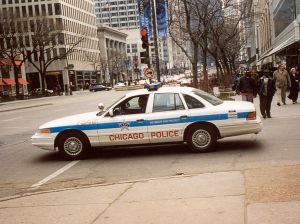
There have been several cases throughout the country that have given some clues as to how the courts interpret police behavior, especially when it is the suspect and not the police themselves who directly causes a collision. In a case in Sacramento CA, the court found that there was some evidence to suggest that the officers had created a dangerous situation in their pursuit of the suspect. For example, the police failed to turn their red lights on and the injured plaintiff indicated that he never heard any police sirens despite the fact that he had his windows rolled down and the radio was off.

176193_chicago_police.jpg

In an action against the city of Pasadena CA, the court ruled that under the circumstances, there was enough evidence to bring a cause of action for wrongful death against the city. In that case, the officers pursued a suspect solely for a traffic infraction on city streets in excess of 100 miles per hour.

In another case against the city in Compton CA, officers stopped a motorist without identifying themselves as law enforcement and began brandishing guns, causing the motorist to flee in panic and collide with the plaintiff's vehicle.

In a Connecticut case, contrary to their pursuit policy, the police chased a suspect at high speeds the wrong way down a one-way street causing the pursued vehicle to strike the plaintiff's vehicle.

In some cases, the question becomes whether the driver of the pursued car was driving in a reckless manner and endangering the public before the police began to chase him. In such a situation, the failure of the police to engage in a chase would have presented a substantial threat to public safety. The other question is whether the pursuit in itself was exceptionally hazardous under the circumstances. A chase in a rural area with no businesses or residences where the police are traveling only 5-15 miles per hour over the speed limit would not fit under the category of exceptionally hazardous. In a case against the City of New Orleans, the court ruled that driving over the speed limit in the pursuit of a suspect was not considered negligence per se (i.e. automatically negligence).

However, in a case against the city of West MS, the court ruled that officers chasing a suspect through residential neighborhoods at speeds in excess of 80 to 100 miles per hour and where a plaintiff's residence was damaged by the suspect's out of control vehicle was enough to state a cause of action against the city.

In an upstate NY case, the key question for the court was whether officers acted in reckless disregard for the safety of others. Some key questions are how far police officers were from the fleeing suspects; the conditions of traffic (heavy or light); whether police tried to overtake the suspect's vehicle or force it from the roadway; and how close the police were from the collision and the speed of the officers at the time.

Another key question is whether the city / municipality had properly trained its police force as to high-speed police pursuit and the alternative use of warrant arrest procedure.

If you or a family member have suffered serious personal injury or Texas wrongful death from a San Antonio police chase , immediately contact a San Antonio personal injury lawyer .

Bookmark and Share

November 27, 2009

Liability of the Texas Municipality for Police Chase Accidents

Imagine you are driving on a nice sunny day in the heart of Texas, and your vehicle is suddenly impacted from the side by another vehicle moving at an extremely high rate of speed. After the initial shock wears off and you initially deal with the inevitable injuries of such a terrible accident, you come to find out that the police were chasing the person who collided with your vehicle.

The ultimate question in such a situation is as follows: Is the police officer or the Texas county municipality responsible for his conduct liable for a Texas wrongful death or personal injury caused by a vehicle being pursued by the police ?

The answer is … it depends. For example, in Draper vs. Los Angeles, the court ruled that while the police pursuit may have contributed to the reckless driving of a fleeing individual, the officers did not have a duty to allow him to escape. In addition, the court ruled that there was no requirement on the part of officers to warn other drivers to keep out of the way, and there was no evidence that the police were trying to force the fleeing individual to the curb.

In Pagels vs. San Francisco, the court ruled that the police had a duty to operate their vehicles with due care, and it made no difference whether the pursuit was close or near at the time of the collision with the other vehicle.

In contrast, in Myers vs. Town of Harrison, the widow of a taxi driver who was killed by a fleeing driver chased by the police, filed suit on behalf of her husband's estate. The pursued vehicle driver had been in a minor accident just prior to the chase. The court ruled that evidence of wet weather and road conditions over the course of the route of pursuit and the incredibly high speeds involved backed up the claim that that the police acted negligently. It did not matter that the police later determined after the accident that the vehicle had been stolen.

910919_nyc_taxi_1_2.jpg

There are certain elements that go into a determination of whether a police pursuit is negligent where the fleeing driver's reckless driving causes a San Antonio auto or truck accident .

- How long was the length of the high-speed chase?
- What were the road conditions?
- What was the time of day of pursuit?
- Was the driver of the pursued car driving in a reckless manner and endangering the public before the police began to chase him, creating a situation where the police had to act to protect the public safety?
- What was the proximity of the nearest police vehicle in pursuit just prior to the collision?
- What were the speeds of the vehicles involved in the pursuit?
- Was the police officer negligent in his conduct of the stop and pursuit? (Example: the officer allows the suspect to leave the car ajar and engine running at the time of the stop and left him unrestrained, allowing him to escape.)
- Did the police flash and sound their sirens during the course of the pursuit so as to alert innocent drivers / pedestrians?
- Did the police violate their own department's pursuit policy?

The ultimate question in which these factors play a role in answering is whether the police should have abandoned the chase out of consideration of safety to the public.

In our next blog, we will discuss some additional cases in which the police and the governing municipality were in fact found negligent for an accident caused by a fleeing driver during a police chase.

A negligent police chase in San Antonio and greater Texas can occur whether the police impacted your vehicle or acted negligently so as to indirectly cause another driver to injure you. Whether you have been affected in a personal injury car accident or a San Antonio wrongful death trucking accident, contact a San Antonio personal injury lawyer without delay.

Bookmark and Share

February 28, 2009

San Antonio Texas Truck Accidents Updates

As Texas roads become littered with more and more trucks traveling across state lines, Texas residents are at greater risk of catastrophic heavy truck accidents. If you have been a victim of a heavy trucking accident in Texas or the greater southwest region, then time is running against you and it is imperative that you contact a Texas personal injury attorney who can guide you through the maze of discovery and help your case obtain critical time sensitive evidence.

Today, all major tractor trailer and heavy truck drivers in Texas and the companies that employ them are governed by Federal Motor Carrier Safety Standards . The standards and regulations of this government agency are designed to reduce Texas crashes and injuries caused by trucks and buses.

The most significant aspect of these regulations is that in the course of an investigation a Texas personal injury attorney can discover specific violations of the Federal Safety standards. Any violation automatically creates the presumption of negligence per se, a legal term used to reflect negligence as a matter of law. In negligence per se situation, the issue of whether the truck driver committed negligence has already been answered and the question never goes to the jury. With negligence per se, a personal injury victim is eligible to receive punitive damages, which are intended to punish reckless conduct and are awarded in addition to actual damages.

422866_accident.jpg A Texas strong heavy trucking accident attorney will take important steps such as the subpoena of the driver's trip expenses and compare those expenses with the driver log. Oftentimes, there will be discrepancies between the expense record and the log. For example, the trip expenses may show the driver was operating the vehicle while a log shows the driver was sleeping. Under federal regulations, drivers can only operate their vehicle for so many hours within a given period.

Other steps include a thorough mechanical survey of the truck's brakes and other potential mechanical issues to determine whether improper maintenance caused the accident. Again, improper maintenance would be considered negligence per se.

A Texas personal injury attorney will employ a heavy trucking expert to discuss discrepancies in the driver's log and poor maintenance to influence a jury as to who truly was at fault.

Bookmark and Share

January 29, 2009

Texas Personal Injury : Parental Responsibility for Children's Acts of Negligence

Your child has committed some form of negligence in Texas resulting in a personal injury to another person. Are you as the parent responsible for your child's negligence ? To what degree ? These are common questions being played out by San Antonio and greater Texas personal injury attorneys throughout the state and nation.

When faced with potential causes of action against parents of children who have committed negligent acts, several theories of liability may be utilized. The first theory is a failure of the parent(s) to supervise. The second theory is the parent allowing a child to operate a motor vehicle or dangerous objects. The final theory of liability surrounds personal injuries from drug or alcohol intoxication .

Several states subscribe to the rule that parents cannot be held liable for a failure to properly supervise their children. Yet there are certain situations in which a parent could very well be held civilly liable for the actions of their children. Those situations arise where parents negligently entrust their children with "dangerous instruments".

XJ40.jpg

A common form of dangerous instrument is a gun. However, many Texas and San Antonio residents would be surprised to learn that even a paintball gun can be classified as a dangerous instrument. The implication is that theoretically parents can be held liable where their child used a paintball gun to cause an eye injury to another minor, particularly in situations where the injury was caused outside an actual paintball game. Gun safety particularly in Texas with its abundant outdoor hunting opportunities is a serious issue for any parent to consider.

816799_quads.jpg

In other cases, a Texas All Terrain Vehicle (ATV) has been upheld to be a dangerous instrument. Juries have determined that due to the speeds associated with such a vehicle, and the ability of a passenger to hold on to the driver while seated, an ATV is a dangerous instrument.

The key question in many Texas personal injury cases is whether the parent was in fact aware that the child possessed the dangerous instrument. Another secondary factor is whether the parents knew of any potentially violent propensities of the child to hurt others. Generally, if it can be shown that the parent(s) did not know that the child possessed a dangerous instrument or knew of any violent predispositions of their children, Texas negligence claims for negligent supervision of children will fail as to the parents.

Enjoy the video - Baseluos Law Firm (BLF) will cover parental liability for their children's negligent use of auto and minor alcohol consumption.

Bookmark and Share